Professional degrees

Probably by now, y’all are tired about hearing hubbub around the Department of Education’s reemphasis of the list of professional degrees. The internet is all aflutter about it, and I’ve decided to flutter along.

In the past couple weeks, I have seen a multitude of posts about professions not included in the list of professional degrees. I have seen zero posts about professions that are included in this list. (Have you? Let me know in the comments below.)

Thus, I am hear to say this:

Chiropractic is a professional degree.

Thank you. Come again. I’ll be here all week.

MD following DC

Yesterday, I got some questions from a chiropractic student via the feedback form. I thought it would be helpful to post the questions and my responses for reference.

The questions were:

  1. What compelled me to pursue a medical degree after receiving a chiropractic degree?
  2. Did I find that having a chiropractic degree made the application process easier or more challenging?
  3. How did medical school admissions committees view my chiropractic degree?

Here was my response:

“Prior to deciding to apply to medical school, I was the staff chiropractor for a United States military hospital. I’m sure you’ve heard at chiropractic school that it is especially rare for a chiropractor to work in a hospital, private sector or otherwise. It is also a highly coveted position, and highly competitive. Because I served as the staff chiropractor for one such United States military hospital, I experienced high exposure to medicine, and thus became more and more interested in the field. This culminated in applying to and getting accepted to medical schools. 

The application process is a challenge for everyone, chiropractor or not. Interestingly, the medical school application gives more weight to undergraduate education, rather than any graduate education. Thus, if your undergraduate work is weak, a strong performance at any graduate school will not save your application. Personally, I made my DC into an asset, rather than a liability. However, I’m sure you are aware that some physicians have poor opinions of chiropractors, just as some chiropractors have poor opinions of physicians. You will not receive an interview from a medical school with an admissions committee with such physicians. It is difficult to identify which schools these are. The schools that interviewed me were fascinated by my clinical experience as a chiropractor, rather than repelled by it. 

I have cc’d my premed advisor, Dr. Lawrenz-Smith, on this email. She is the premed advisor for the postbac program at NWHSU. I am sure she would be happy to speak with you. Do let me know if you have further questions.”

Do you have further questions? Let me know in the comments below.
I did a thing

Hear ye, hear ye!

As you now know, I will be going to medical school soon. During my journey to medical school, I conducted post-baccalaureate studies at the same school where I completed my chiropractic degree.

I have been so impressed with the post-baccalaureate faculty and my classmates that I created a scholarship. It is currently accepting applications, due 1 July 2024. This year’s prompt is the following:

2024 prompt: Explain the COVID-19 pandemic. What did you learn about this event? What should healthcare learn about this event?

My vision is to submit the yearly prompt in video format. My hope is that my descendants continue this tradition. The aim is for applicants to submit a video response, no more than three minutes in length. A committee will select the recipient of the scholarship.

If you attend NWHSU and are a premed student with aspirations to apply to medical school this application cycle, do not delay and apply today!

A new journey

I moved to Japan in 2019. Four and a half years later, it is time to begin a new journey.

I am pleased to announce that I have been accepted to multiple medical schools in the United States this year. I will return home and matriculate to medical school this summer.

Yes, I’ll be an older medical school student. But, I’m still young, and I’m ready to learn something new.

A frequently asked question is what am I planning on for a future specialty in the medical field? The honest answer is I have no idea. My future specialty will be the intersection between what I am interested in and what I am talented at.

Another frequently asked question is why am I changing careers? That’s a story for another day.

I said this when I left private practice, but it’s still true. These past years in Japan have been some of the happiest in my life. I hope you and I have many more happy years to come.

A presentation I made

One of the internal medicine physicians at the hospital where I work is very curious about the vertebral subluxation complex. Though not trained in identifying this, he has been able to consistently correctly identify malposition in the patients he refers. He recently asked if we could have a more didactic discussion on this topic.

Thus, this is the presentation I created:

Our discussion ended up flowing into the more complex subject of identification of misalignment of the SI joints, but I used the above to guide the afternoon.

Have you given similar presentations to a healthcare professional of a different specialty than your own? If you are a chiropractor, how would you have presented this topic? Would you like me to make a presentation more specific to the SI joints? Let me know in the comments. As always, I welcome your feedback.

At work

Greetings!

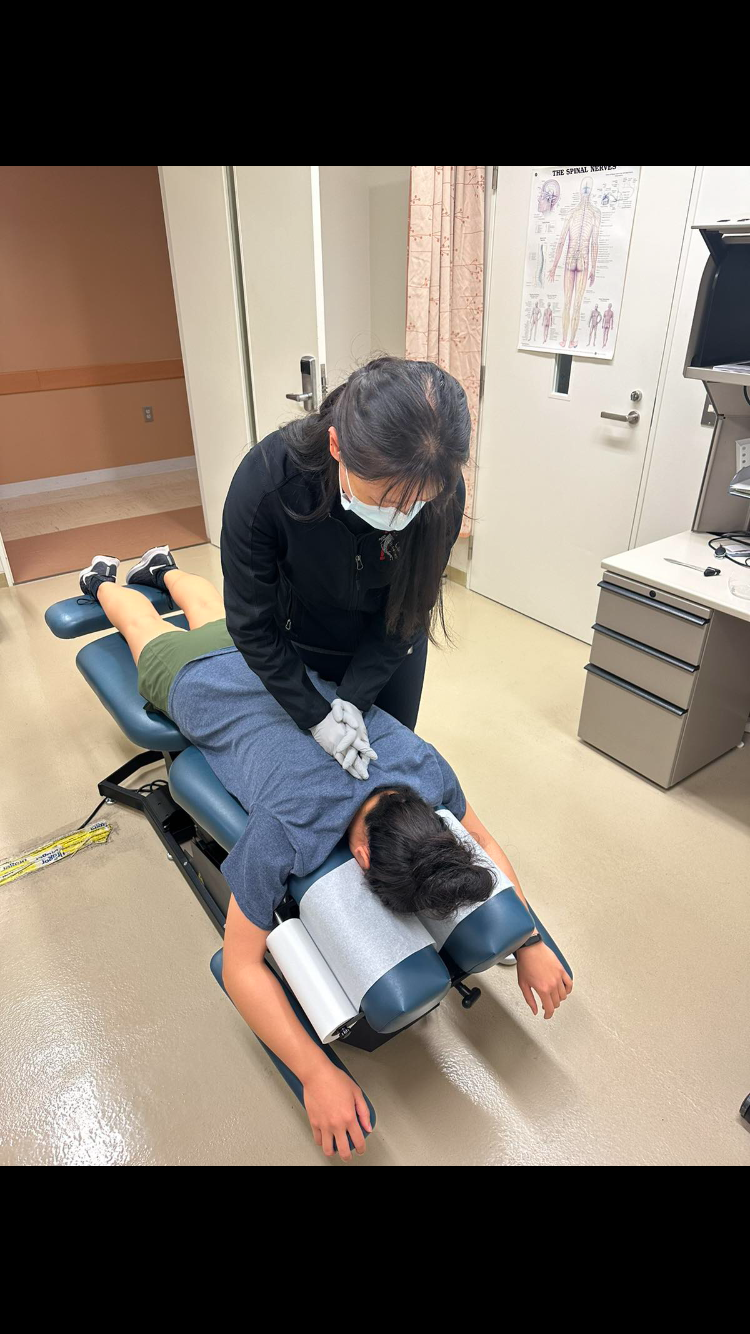
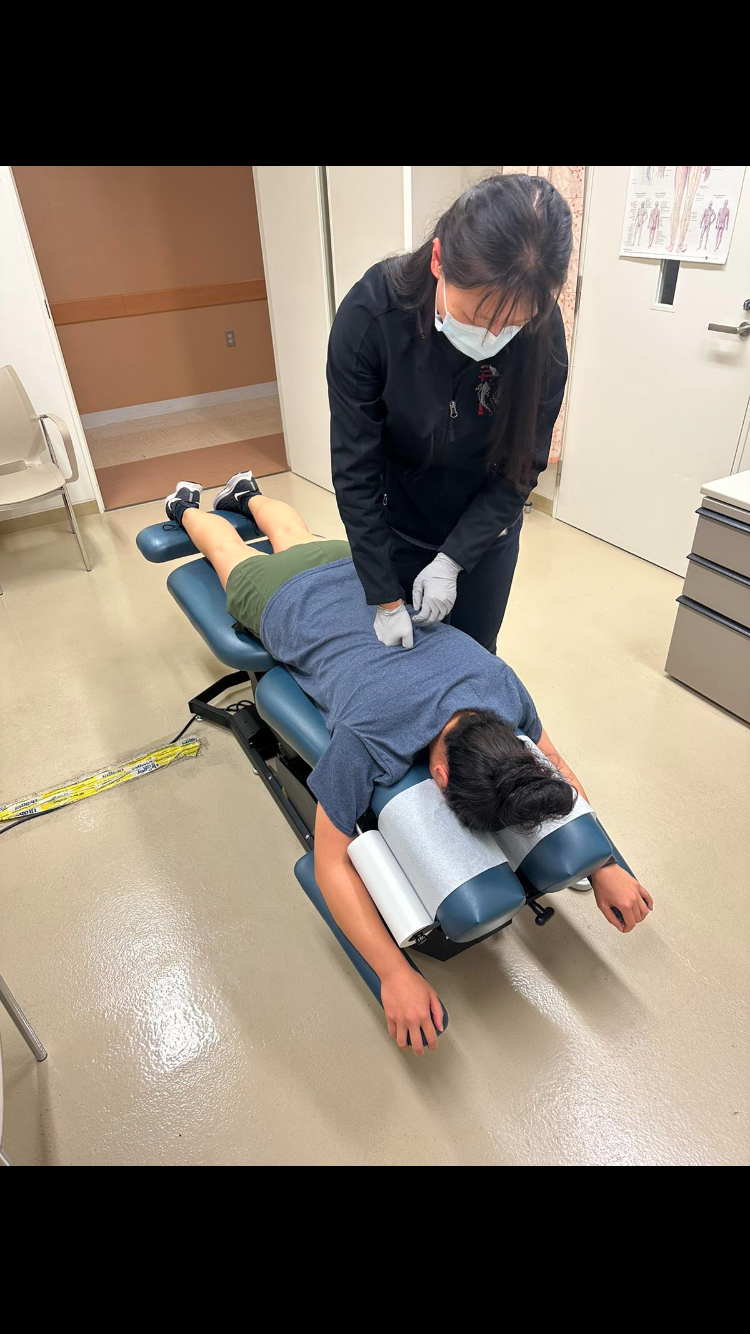
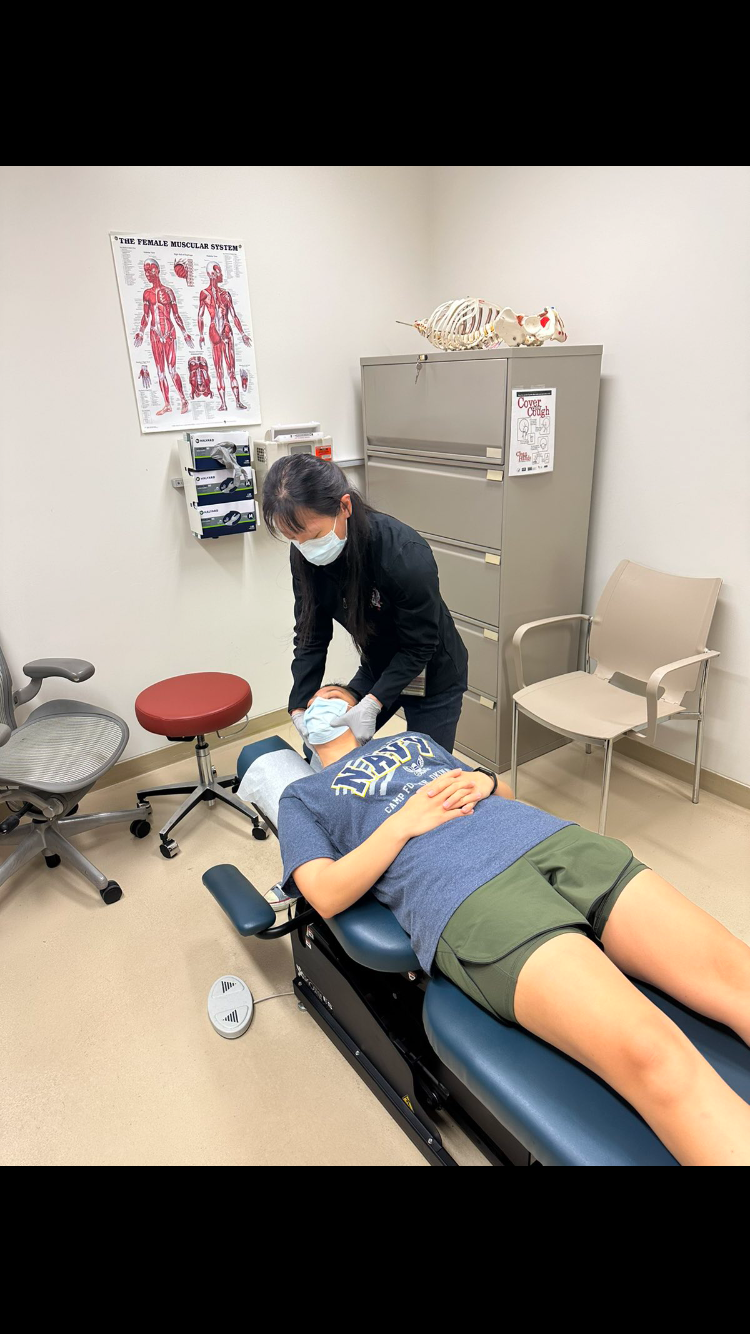
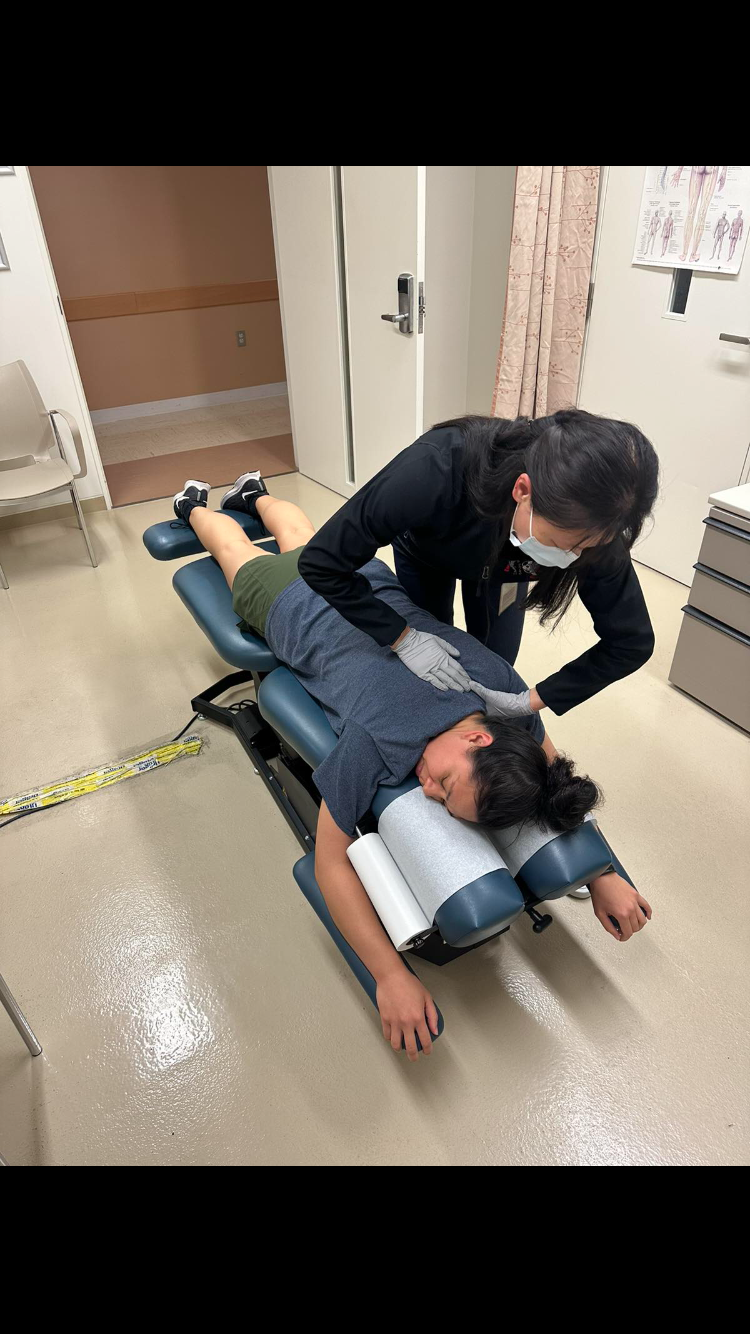
I haven’t posted in a while, but here are some pictures of me at work.

How do you do these manipulations? Has anyone ever documented you at work? Tell me in the comments below.

Risks

I’m sure y’all have heard about the association of stroke and chiropractic manipulation of the neck. Chances are, it’s written in the informed consent that you sign before receiving treatment from a chiropractor. It was in the informed consent form that I had at my private practice, and it’s a discussion that I have with my patients in my current position.

The NIH states that “incidence of [vertebrobasilar stroke] was too small to report.” For those who like numbers, however, “1 per 5.85 million cervical manipulations” has been calculated by Haldeman et al. I also have notes from my alma mater that state that the risk is about 1 in every 3 million cervical manipulations, though I can’t seem to find this number cited elsewhere. (Can you? Let me know in the comments below.) The risk of stroke from chiropractic manipulation, however, is hotly disputed, with giants like Forbes slinging mud at the NIH, and the NIH striking back. These days, I put things into perspective for my patients by providing another number.

The risk of blood clots related to the Johnson and Johnson COVID-19 vaccine seems to be about 1 in 1 million.

You guys, 1 in 1 million is significantly more risk than “too small to report,” 1 per 5.85 million, or 1 in 3 million. Do understand, and every patient of mine has understood after I’ve explained it in this way, that treatments and prophylactics can return to the marketplace despite risk. That was true of the Johnson and Johnson COVID-19 vaccine, and chiropractic has continued though there have been adverse events. Ultimately, it is not about risk, but rather the risk to benefit ratio that matters. Health care professionals have an obligation to inform you of the risks so that you can make a decision on whether you wish to undergo a procedure. I have had patients refuse treatment because they think that 1 in 3 million is too much risk to bear. I respect that fully. On the flip side, I have had to explain to other patients that chiropractic manipulation is highly inadvisable for them, because the risk to them, based on their health profile, is simply not worth the potential benefit. As sentient beings, we have choice.

I will conclude with a question I frequently ask to my patients. What are your questions?

Zooming

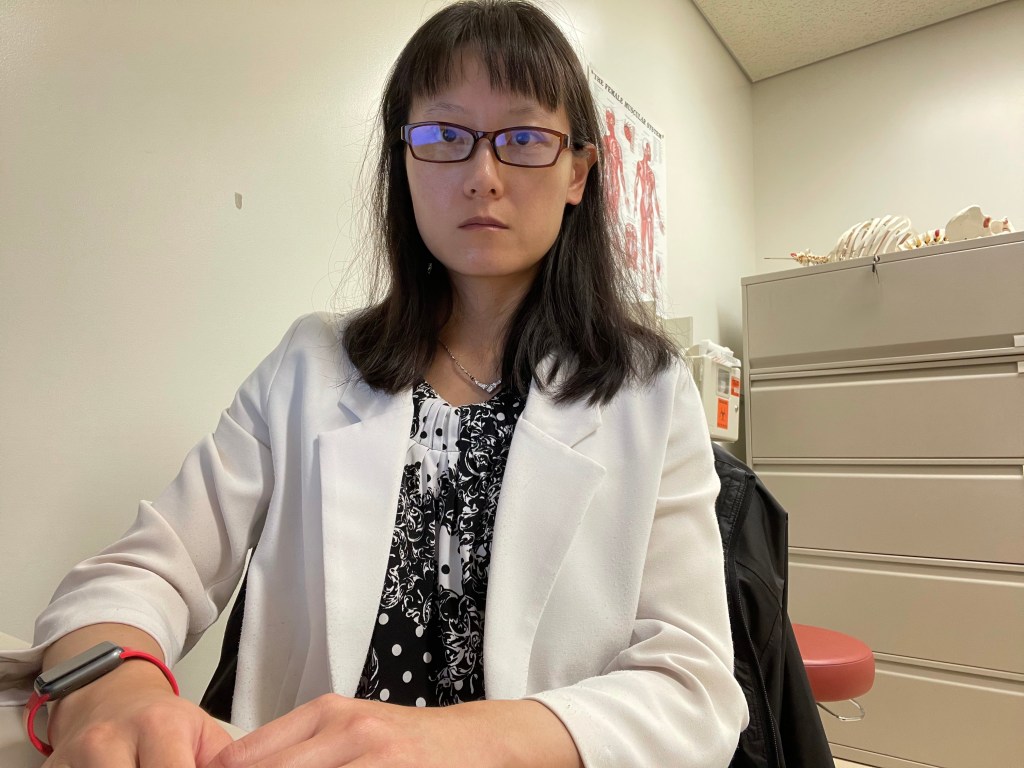
This is a screenshot of me during a zoom seminar, held by the chiropractic professional organization of which I am a member.

Boy oh boy, do I look unenthused.

Have you taken Zoom seminars? How do you stay engaged? Let me know your tips and tricks in the comments below or here because I clearly need help.